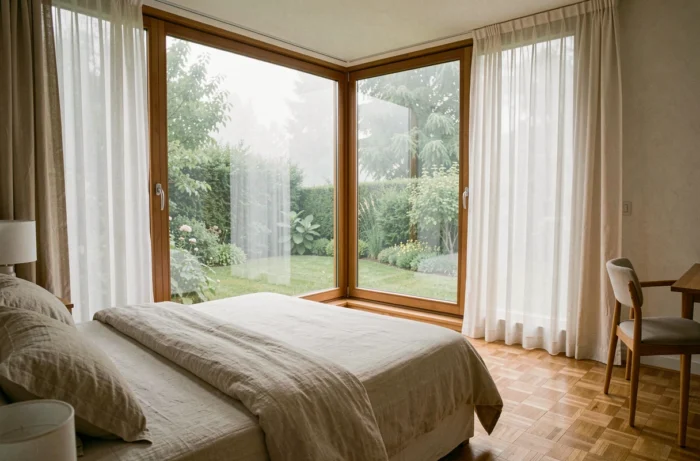
A large window in a bedroom is not sized the same way as one in a living room. The relationship between glazed surface area, thermal inertia of adjacent walls, and solar exposure radically changes the overall performance of the envelope. Choosing a generous format without anticipating structural and climatic constraints exposes one to costly modifications or lasting discomfort.
Structural constraints of a large bedroom window
A large frame increases the loads transmitted to the lintel and supports. In traditional masonry, widening an opening beyond standard dimensions often requires a reinforced concrete lintel or an I-beam, along with adjustments for load distribution. In timber framing, the free span of the header must be recalculated as soon as the width exceeds that of a standard module.
The weight of the glazing is another underestimated variable. Double glazing with enhanced insulation weighs significantly more per square meter than standard double glazing. With triple glazing, the mass increases further. The hinges, frame, and hardware must be sized accordingly; otherwise, the sash may sag within a few years.
We recommend having the load-bearing capacity checked by a structural engineering firm before ordering any non-standard carpentry. The cost of this study remains marginal compared to the price of retrofitting.
Knowing which large window to choose for a bedroom requires cross-referencing these structural data with the type of load-bearing wall, the thickness of insulation, and the available ceiling height.
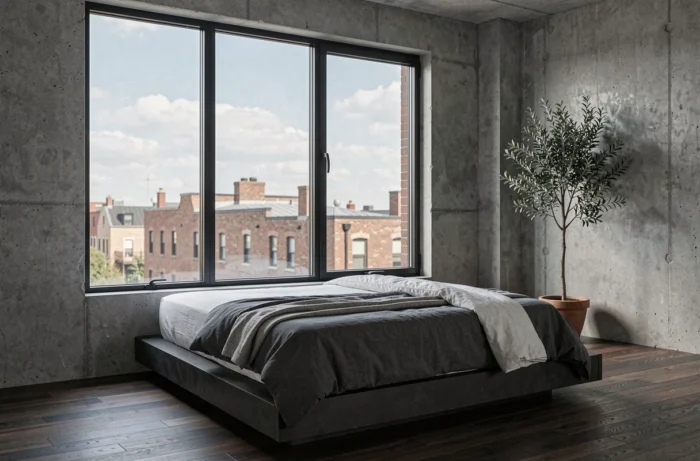
Summer overheating and orientation: the decision to make before glazing
A west-facing bedroom with a large glazed area systematically overheats in summer. The low sun at the end of the day strikes the opening at an angle that neither a roof overhang nor an interior blind can effectively compensate for. Only external solar protection (roller shutter, adjustable sunshade, shutter) can truly cut off heat gains.
The ADEME notes that external protections block heat before it passes through the glazing, whereas an interior curtain merely redistributes it within the room. For a south-facing bedroom, a well-calculated roof overhang is often sufficient to limit solar gains in summer while allowing winter light to enter. In an east-facing orientation, the problem concentrates on summer mornings, which is less of an issue for a bedroom that is left early.
Solar factor of glazing and nighttime comfort
The solar factor (Sw) measures the portion of solar energy transmitted through the glazing. A high Sw increases free heat gains in winter but exacerbates summer overheating. For a large bedroom window facing west or southwest, solar control glazing (Sw around 0.35 with protection) significantly reduces indoor temperature in the evening.
This choice has a trade-off: perceived brightness decreases slightly. In a bedroom, the loss remains acceptable since the need for intense natural light mainly concerns living spaces.
RE2020 and glazed surface: what the regulations really impose
The RE2020 sets a minimum glazed area for the entire dwelling, not room by room. Installing a large window in the bedroom does not guarantee regulatory compliance on its own. Conversely, a bedroom can have a modest opening if the rest of the dwelling compensates.
In practice, the verification focuses on a ratio between the total glazed area and the reference surface of the building (or, in collective housing, the dwelling). This means that enlarging the bedroom window sometimes frees up margin to reduce openings on a noise-exposed facade, for example.
- Compliance is calculated based on the total glazed areas of the dwelling, not on each room individually.
- The useful glazed surface (clear glazing) differs from the total surface of the carpentry: a thick-profile frame reduces the share of effective glazing.
- In renovations, RE2020 does not systematically apply: requirements depend on the nature and extent of the work undertaken.
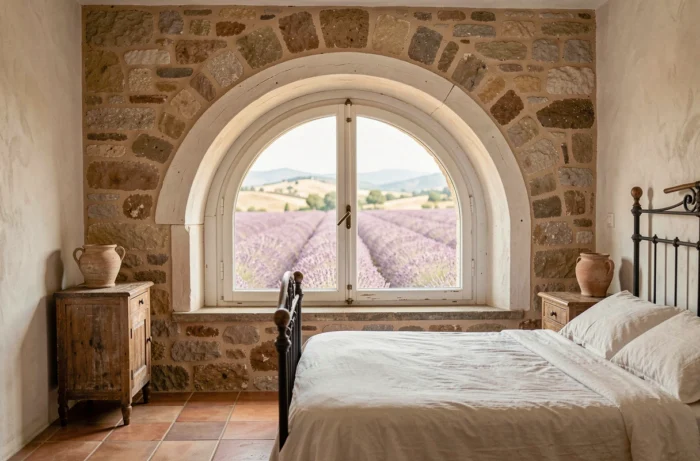
Casement or sliding: which type of opening for a large bedroom window
The opening mode affects nighttime ventilation, security, and space usage. For a large window, two options dominate.
Casement and controlled ventilation
The casement allows for ventilation through the transom without fully opening the sash. In an upstairs bedroom, this is an advantage for child safety and against intrusion. The pocketing of the sash does not encroach on interior space in the casement position, which is suitable for bedrooms where the bed is along the facade wall.
The limitation appears with very large formats: beyond a certain width, the weight of the sash puts significant strain on the casement hardware. Manufacturers then require a fixed lateral sash coupled with an operable one, which alters the clear glazing and aesthetics.
Sliding with translation and XXL dimensions
The sliding option allows for significantly wider openings without weight constraints on the hinges, as the sash rolls on a track. In a bedroom with access to a terrace or balcony, the sliding option remains the most coherent solution.
Its drawback: air tightness is generally lower than that of a French or casement window. For a bedroom, where silence and thermal insulation at night are important, it is necessary to demand a sliding window with thermal break and reinforced brush seal or lip seal.
- Casement: preferred for upstairs bedrooms, good airtightness, width limitation related to the weight of the sash.
- Sliding with translation: suitable for large widths and outdoor access, require a high air tightness class.
- Fixed frame + operable sash: compromise to increase the glazed surface while maintaining a ventilation point.
PVC, aluminum, or mixed: which material for a large bedroom frame
On a large frame, the choice of material is no longer just aesthetic. Aluminum offers thinner profiles with equivalent mechanical strength, which increases the clear glazing. PVC remains effective in thermal insulation but requires internal steel reinforcements that add weight to the frame and thicken the sash.
The wood-aluminum mix combines the structural rigidity of wood on the inside with the weather resistance of aluminum on the outside. Its cost is significantly higher, but it allows for contained frame sections on large spans, with a warm interior finish suitable for a bedroom.
The last criterion not to be overlooked is maintenance. In a bedroom, the carpentry is less exposed to splashes than in kitchens or bathrooms, which mitigates the advantage of PVC in this regard. Powder-coated aluminum and factory-treated wood can last without intervention for about ten years under normal exposure conditions.