
Plumbing encompasses all techniques related to the circulation of water within a building, from the delivery point of the public network to the evacuation towards the sewer system or individual sanitation. Two distinct circuits coexist permanently: the supply of pressurized drinking water and the evacuation of wastewater by gravity. Understanding this duality is already grasping the logic of any sanitary installation.
Supply and evacuation circuits: two opposing logics
The supply network operates under pressure. Water arrives from the meter, passes through a pressure reducer if necessary, and then distributes to each draw-off point (tap, shower, toilet flush). The pipes must withstand this pressure continuously, which requires suitable materials and fittings.
The evacuation network, on the other hand, operates by gravity. The pipes slope downwards with a minimum regular gradient to ensure that water flows without stagnation. A slope that is too shallow causes blockages, while a slope that is too steep allows water to flow away, leaving solid materials behind.
The physical separation between these two networks is a fundamental health requirement. No direct connection should allow wastewater to backflow into the drinking water circuit. Since January 1, 2023, regulations have strengthened the levels of protection against backflow, both at the delivery point and on certain specific take-offs. Backflow prevention devices (disconnectors, check valves) must be installed and remain accessible for maintenance.
To delve deeper into the basic concept of plumbing according to Une Autre Maison, this distinction between pressure and gravity remains the starting point to master before any intervention.
Pipe materials: comparing copper, PEX, and multilayer
The choice of material determines the durability, cost, and ease of implementation of an installation. Three families currently dominate residential construction sites.
- Copper remains a reference for water supply. Resistant to corrosion and recyclable, it withstands high temperatures. However, its installation requires soldering or mechanical fittings, which demand specific tools and technical expertise.
- PEX (cross-linked polyethylene) has largely replaced copper in recent constructions. Flexible and economical, it can be cut and connected without welding. It comes in different qualities depending on the use (hot sanitary water, heating). Its flexibility allows it to be passed through embedded ducts without intermediate fittings, reducing the risk of leaks.
- Multilayer pipe combines a layer of aluminum between two layers of plastic. It retains its shape after bending, offers good sealing, and resists thermal expansion well. In return, it requires dedicated crimping tools, which are more expensive than standard PEX clamps.
For evacuation, PVC remains the standard. It has definitively replaced lead, which has been banned for years due to its toxicity. PVC is available in several standardized diameters according to the flow to be evacuated.
Pipe diameter: a often underestimated parameter
A diameter that is too small creates pressure losses in the supply network, reducing the flow at the tap. In the evacuation network, an inappropriate diameter promotes blockages. Sinks generally use a smaller diameter than toilets or bathtubs. Each sanitary appliance has a minimum evacuation diameter defined by current standards.
Plumbing fittings: understanding types of connections
Fittings ensure the connection between pipes, changes in direction, and branches. Their choice depends on the material used and the type of circuit.
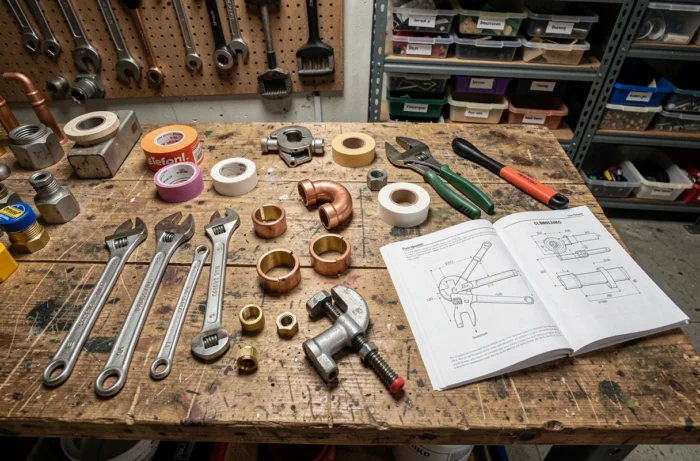
On copper circuits, we distinguish between solder fittings (capillary welding with a torch) and compression fittings (tightening with a nut). The latter are more accessible for beginners but bulkier.
On PEX and multilayer circuits, crimp or compression fittings dominate. The crimp fitting requires a specific tool but offers a reliable and compact connection. The compression fitting can be installed by hand with a simple flat wrench, making it popular for renovations.
For PVC evacuation, fittings are glued with solvent adhesive. The assembly is quick but irreversible: an orientation mistake requires cutting and starting over. Elbows, tees, and reducers are available in all common diameters.
Reacting to water damage: essential reflexes to know
Most plumbing guides stop at technical gestures. However, knowing how to manage water damage is as fundamental as knowing how to install a fitting. An uncontrolled leak can damage a home in just a few hours.
The first reflexes are simple but often forgotten in panic:
- Shut off the main water supply at the stopcock (located near the meter or under the sink in an apartment).
- Secure the electrical circuit if water is likely to reach outlets or a panel.
- Notify the downstairs neighbor or the property manager if the damage affects a collective building.
- Keep evidence (photos, invoices) and report the incident to the insurer within five working days of discovery.
This reporting deadline is a contractual obligation. Exceeding it can seriously complicate compensation. A reported case in Essonne illustrates the potential persistence of damage: a home delivered in 2024 remained uninhabitable due to infiltrations that successive repairs did not resolve.
Non-potable water in housing: a recent framework to know
Since the texts of July 12, 2024, the domestic use of rainwater and certain grey waters has a precise regulatory framework. These waters can be used for irrigation, floor washing, or toilet flushing, under strict conditions.
Non-potable water networks must remain physically separated from the drinking water network. The relevant draw-off points must be clearly marked to avoid any confusion. Connecting a rainwater collector directly to the drinking water circuit constitutes an infringement and a direct health risk.
Domestic plumbing is not limited to fittings and pipes. It involves choices of materials, sizing constraints, regulatory obligations, and practical reflexes in case of incidents. Mastering these fundamentals allows for maintaining an existing installation, effectively communicating with a professional, or simply understanding what happens behind the walls.