Local news refers to information produced at the level of a municipality, neighborhood or urban area: municipal decisions, roadworks, cultural events, local incidents and weather alerts. Unlike national or international news feeds, this content is rarely surfaced by the algorithms used by major platforms. Accessing reliable local information means combining several channels, each covering a different area and type of content.
Official alert channels and cell broadcast
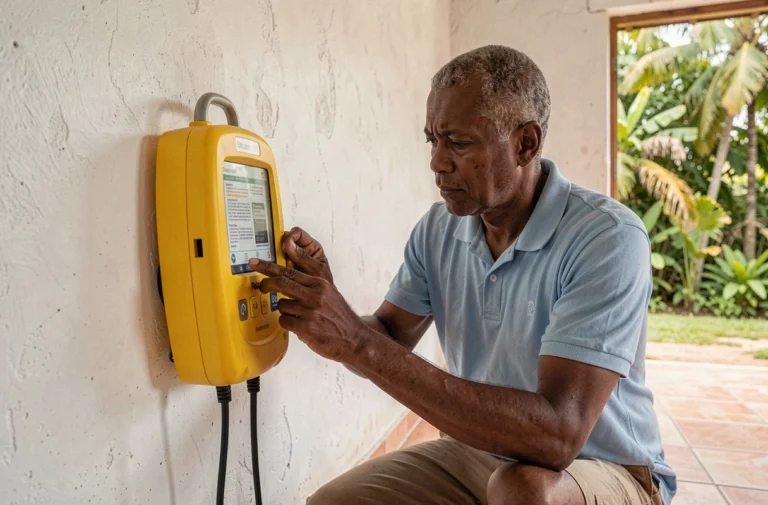
Local authorities and civil protection agencies have dedicated channels for issuing urgent messages. In Switzerland, the Alertswiss app sends location-based notifications in the event of a natural hazard, industrial incident or infrastructure outage.
Since 20 October 2026, Alertswiss notifications have also been available in easy-to-read language, making them accessible to people who have difficulty reading. This type of accessibility remains rare in European alert apps.
On 28 October 2026, the Federal Council adopted a proposal to introduce cell broadcast. This system would make it possible to send an alert to every phone in a given area, without prior registration or an installed app. The proposal is before Parliament and has not yet been rolled out nationwide. The same text proposes transferring responsibility for fixed and mobile sirens to the cantons, while the Confederation would retain a role in triggering them remotely.
In practice, municipal platforms such as PanneauPocket also share local ordinances, road closures and special waste collections. On infolocale.be, associations and town halls publish their events directly, providing access to a local calendar populated by the organizers themselves, without editorial filtering.
Regional media and local newsletters: choosing your sources
Regional newspapers remain the backbone of local news. La Tribune de Genève, 20 Minutes Suisse romande and RTS each cover a specific geographic area, with sections dedicated to municipalities, local incidents and cantonal politics.
The difference between these sources lies less in the volume of coverage than in their approach. A paid daily such as La Tribune de Genève offers in-depth investigations and political analysis. A free paper such as 20 Minutes focuses on short factual reports and rapid event coverage. As a public broadcaster, RTS emphasizes audiovisual reporting and social issues.
Municipal newsletters and official calendars
Several cities offer themed newsletters. Geneva, for example, publishes a “What’s on in Geneva?” newsletter listing the week’s cultural, sporting and community events. These newsletters are free and can be tailored by neighborhood or area of interest.
Subscribing to two or three complementary newsletters (one from the municipality, one from a media outlet and one from an association) is enough to cover the essentials without overwhelming your inbox. The trap is signing up for so many that you stop opening any of them.
Google Discover and news aggregators: understanding the algorithmic filter
Google Discover displays articles on the home screen of Android smartphones and in the Google app on iOS. Its feed is personalized based on browsing history, detected interests and location.
This channel has a built-in limitation when it comes to local news. Algorithms favor content that drives high engagement, giving national stories and sensational incidents an advantage. A report on a municipal council meeting or a waste collection schedule will almost never appear in Discover.
Aggregators such as Google News let you create sections by city or keyword. Their usefulness depends on how many local media outlets are indexed in the area. In a large urban area, the feed will be full. In a rural municipality, it may remain empty.
- Turn on location services in Google News to receive suggestions related to your municipality
- Create a custom topic using your city or canton’s name to filter out national news
- Supplement this with a direct subscription to the local media outlet’s website, as not every article appears in the aggregator
Local social networks and neighborhood groups
Facebook remains the most widely used social network for hyperlocal news in French-speaking Europe. Neighborhood groups function as local forums for reporting roadworks, recommending businesses, looking for lost items and sharing community event announcements.
The reliability of these groups depends entirely on how they are moderated. A group run by an association or town hall filters out advertising and rumors. A group without active moderation can spread misinformation, particularly about local incidents.
Neighborhood apps
Apps such as Nextdoor and Voisins Solidaires focus on a limited neighborhood area. Their main value is practical: mutual support, neighborhood alerts and service provider recommendations. They are no substitute for a news outlet when it comes to following local political or economic news.
- Check that the group or app actually covers the municipality you’re interested in before signing up
- Choose spaces with clearly posted moderation rules
- Verify any sensitive information (school closures, health alerts) with an official source before sharing it
Building a local news routine without information overload
The main risk is not a lack of sources, but having too many. Receiving the same information through three different channels does not make you better informed; it creates noise.
An effective local news routine relies on three complementary layers: an official alert channel for emergencies (Alertswiss, municipal alerts), a regional media outlet for editorial coverage, and a community space for neighborhood news. Adding a fourth or fifth channel only offers a real benefit if each one covers an angle the others miss.
Settings matter just as much as your choice of sources. Turn off non-essential notifications in general news apps and reserve push alerts for emergencies to avoid information fatigue, which can eventually lead you to ignore everything.