
In France, the saturation of psychiatric care structures coexists with a multiplication of systems intended to broaden access to appropriate support. Between regulation centers, digital tools, and training in professional settings, the landscape of mental health is transforming, but structural fragilities persist. This article examines the points of tension and emerging responses around psychological suffering.
Psychiatric regulation by phone: a partial relay
When a person goes through an acute psychological crisis, the dominant reflex remains to call 15 or go to the emergency room. Recently, psychiatric regulation centers have been attempting to offer a more targeted alternative.
In Tarn-et-Garonne, a system integrated into the Psychiatric Care Access Service directs calls received by 15 to a psychiatrist, a medico-psychological center, or another suitable solution depending on the situation. Initial feedback shows a concrete operational limit: the team could not yet ensure a presence seven days a week.
This type of regulation avoids some unnecessary visits to hospital emergency rooms, where waiting times often exacerbate the distress of individuals and their families. Associations like La Ligne d’Horizon help to make these support pathways visible by relaying resources focused on psychological and social support.
The question remains open: without continuous coverage, these systems risk creating a threshold effect, where calls outside of operating hours fall back into the traditional emergency circuit.
Psychological suffering of young people: identifying more, but directing towards whom
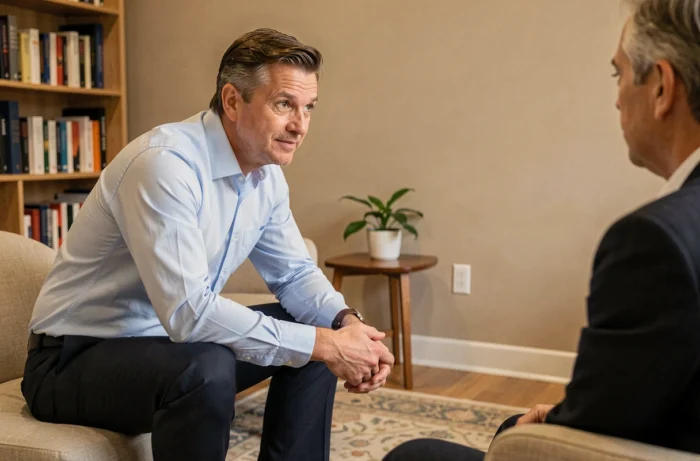
The identification of psychological disorders in young people has improved in recent years, particularly thanks to awareness-raising in schools and media coverage of the issue. The problem lies downstream: access to specialized care for young people remains heavily saturated.
Specifically, an adolescent identified as struggling by a school doctor or psychologist may wait several months to get an appointment at a medico-psychological center. This latency is not without consequences for the evolution of disorders.
The Mon soutien psy system and its limits
The Mon soutien psy program now allows for reimbursed sessions with a contracted psychologist. The number of covered sessions has been increased to twelve per calendar year. This framework facilitates initial access, but it does not cover long-term care or complex situations requiring coordination between psychiatrists, psychologists, and social workers.
Field feedback diverges on this point: some professionals believe that the system helps to relieve public structures, while others feel it directs patients towards follow-ups that are too short to be truly therapeutic.
Social support and mental health: effective but fragile systems
Psychological suffering is not limited to a clinical diagnosis. Pathways of precariousness, isolation, or migration exacerbate disorders and complicate access to care. Local systems combining health, social support, and mediation have been developed to address this reality.
- Participatory health centers combine medical consultations, psychological follow-up, and social support in one location, reducing disruptions in care pathways.
- Mobile psychiatry-precarity teams intervene directly with people in street situations or emergency housing, where traditional care does not reach.
- Listening services provided by associations offer initial contact without an appointment, often crucial for initiating follow-up.
A public evaluation conducted in 2025 reportedly concluded the effectiveness of these systems. However, their funding remained uncertain in the absence of integration into common law. Without budgetary sustainability, these structures risk disappearing even as their utility is documented.
First aid in mental health: training beyond the medical sector
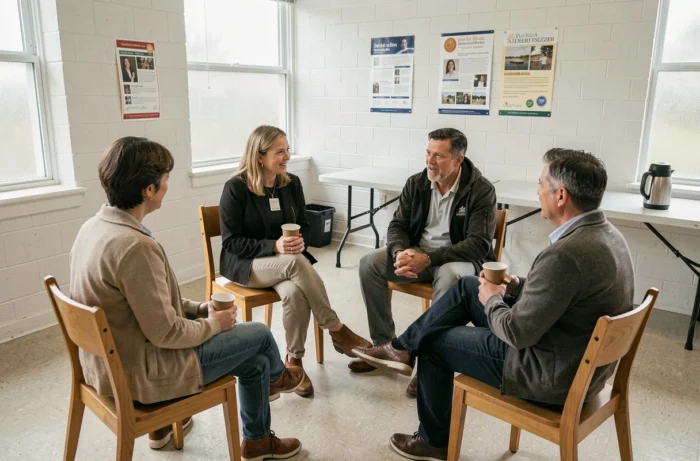
Training in mental health first aid (MHFA) has been expanding in France for several years. Its principle: to teach non-health professionals to recognize signs of psychological suffering and direct the person towards appropriate help.
The novelty lies in the extension of this training to the workplace. MHFA France is preparing a pedagogical kit tailored to the professional environment for autumn 2026, developed with the Occupational Risks Health Insurance. This kit will include the legal obligations of employers regarding the prevention of psychosocial risks.
What the training changes (and what it does not)
Training colleagues to recognize signs does not replace access to a psychiatrist or psychologist. The risk would be to view the training as an end in itself, whereas it is merely a link in a chain of support.
However, in contexts where stigma hinders the demand for help, a trained colleague can facilitate an initial exchange. The available data does not yet allow for measuring the impact of this training on the number of actual interventions in the workplace.
Digital tools and psychological follow-up: beyond teleconsultation
Public support for digital solutions in mental health now goes beyond simple teleconsultation. Clinical assessment and daily life monitoring applications are receiving targeted funding aimed at complementing the work of professionals between appointments.
The challenge is not to replace the therapist but to fill the gaps in the care pathway. A patient who waits three months for an appointment can, through a validated digital tool, maintain minimal monitoring of their symptoms and transmit this data to their practitioner.
However, these tools raise unresolved questions: protection of health data, accessibility for people distanced from digital technology, and the risk of substituting human contact in a field where the therapeutic relationship remains the foundation of care.
The landscape of mental health in France is characterized by a permanent tension between growing needs and fragmented responses. Systems exist, some function, but their sustainability depends on budgetary and legislative choices still pending. For individuals experiencing psychological suffering, the difficulty is often not knowing that help exists, but finding it at the right moment.