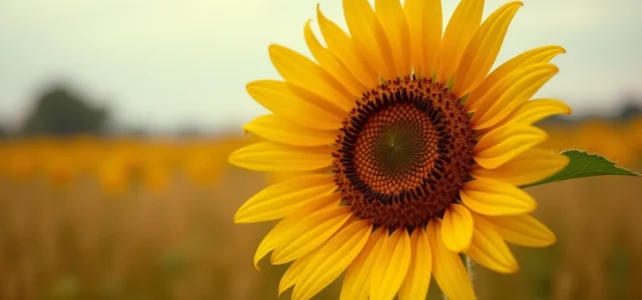
The sunflower turns its corolla towards the sun. This reflex, called heliotropism, is not just a botanical curiosity. It has inspired centuries of symbolic, spiritual, and ritual readings around this flower. Understanding the spiritual significance of the sunflower requires going beyond the simple image of the yellow flower to explore what it activates in living practices, from tattoos to solstice rituals.
Heliotropism and Solar Symbolism of the Sunflower
Before even discussing spirituality, we must return to what makes the sunflower unique among flowers. Its young stems follow the sun’s path from east to west throughout the day. Once flowering is achieved, the flower stabilizes facing east, turned towards the dawn.
This behavior has been documented by botanists who explain it through asymmetric growth of the stem. The shaded side grows faster, which bends the plant towards the light. The phenomenon is purely mechanical, but its symbolic reading transcends the ages.
In several traditions, the sunflower embodies the constant quest for light. It does not follow just any light source: it follows the sun, the central star. This fidelity to the sun has been interpreted as a metaphor for loyalty, constancy, and the pursuit of spiritual elevation. To delve deeper into these dimensions, consult the spiritual meaning of the sunflower and its links to rebirth and positivity.
The Sunflower in Summer Solstice Rituals
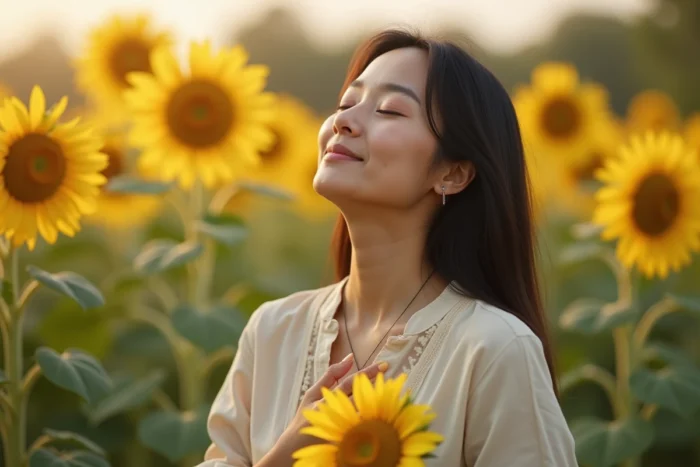
The sunflower is not confined to vases and fields. It occupies a concrete place in contemporary spiritual practices. A recent example: a ritual described by Sophia Mézières for the summer solstice 2026 incorporates two sunflowers on a solar altar, alongside citrine, corn, and honey.
The goal of this ritual is threefold: purification of the aura, vitality, and gratitude towards the light. The sunflower plays a grounding role. It materializes the connection between the person and solar energy at the moment when the length of the day reaches its maximum.
A Marker of Transition Between Two Cycles
The summer solstice marks a turning point. Days begin to shorten. Placing a sunflower in a ritual at this precise moment honors the fullness of light while accepting the gradual return of shadow.
It is this duality that gives the sunflower its dimension of renewal. It does not symbolize a fixed state of permanent joy. It accompanies a turning point, a transition from one phase to another. In this reading, the flower becomes a living ritual tool, not just a simple ornament.
Sunflower Tattoo: A Symbol of Personal Reconstruction
Have you ever noticed the frequency of the sunflower motif in discreet tattoos? This choice is not trivial. A guide published by La Chambre Bleue lists the sunflower among the preferred flowers for tattoos with strong symbolic significance.
The associated meanings are love, renewal, and solar energy. For those who choose this motif, the sunflower often marks a new beginning after a trial. It serves as a permanent reminder, etched in the skin, of the ability to turn towards the light despite dark times.
Why the Sunflower Instead of Another Flower
The lotus symbolizes purity, the rose passionate love, the poppy memory. The sunflower occupies a different niche. Its symbolism combines three dimensions that other flowers separate:
- Loyalty (it follows the sun without deviating, making it a symbol of constancy and enduring admiration)
- Vitality (its intense yellow color and imposing size evoke overflowing energy, linked to joy and life)
- Renewal (its summer blooming coincides with the peak of light, then it produces its seeds before dying, completing a full cycle)
This combination explains why the sunflower appears so often in the language of flowers, spiritual practices, and body art. It covers a wide emotional spectrum without ever tipping into melancholy.
Color and Nature of the Sunflower: What Yellow Activates
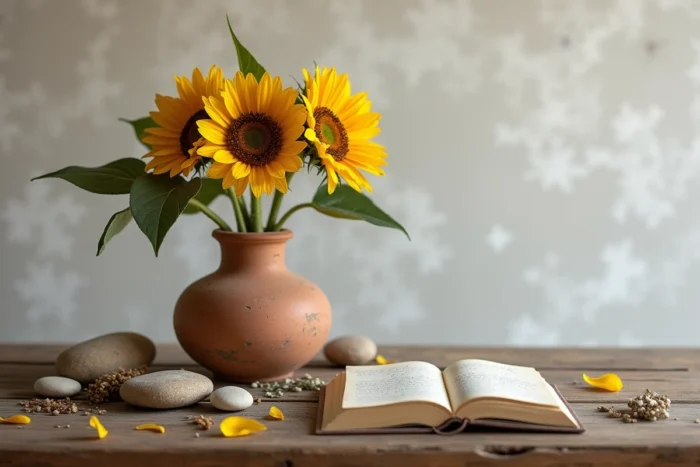
The yellow color of the sunflower is not a secondary detail. In chromotherapy and in several symbolic traditions, yellow is associated with the solar plexus, the center of confidence and will. Wearing yellow, contemplating yellow, or integrating yellow into a space alters the perception of the surrounding energy.
The sunflower pushes this logic further. Its corolla replicates the shape of a solar disc surrounded by rays. This visual resemblance to the sun makes it a natural symbol, not an artificial cultural construct. Nature has produced a flower that resembles the star it follows.
Beyond Yellow: Dark Varieties
Some varieties of sunflower have burgundy, brown, or almost black petals. These varieties carry a different symbolism, closer to deep transformation than to radiant joy. They remind us that renewal sometimes passes through phases of darkness before the return of light.
In a mixed bouquet, pairing a classic sunflower with a dark variety creates a nuanced message. It is no longer simply “I admire you” but rather “I recognize the complexity of the journey taken.”
Integrating the Sunflower into a Daily Spiritual Practice
The sunflower does not require an altar or an elaborate ritual to act as a symbolic reminder. A few concrete uses work in daily life:
- Placing a fresh or dried sunflower in a workspace directs attention towards natural light and stimulates concentration
- Offering a bouquet of sunflowers conveys a message of loyalty and admiration in the language of flowers, without romantic ambiguity
- Using the image of the sunflower as a meditation aid helps visualize an anchoring towards the source of inner light
- Choosing the sunflower as a decorative motif in a living space reminds of the natural cycle of blooming, production, and renewal
The sunflower acts as a visual signal for reorientation. Each time the gaze falls upon it, it brings back a simple intention: to turn towards what nourishes.
This flower does not promise permanent happiness. It reminds us of a mechanism: light exists, and orienting towards it remains a daily choice. It is precisely this active dimension, this perpetual movement towards the sun, that distinguishes the symbolism of the sunflower from that of other flowers.