
One morning, while reviewing your bank statement, a line catches your attention: “Imprimerie Nati,” “Imp Nationale,” or a truncated variant. The amount means nothing to you, and you have no recollection of ordering anything from a printing company. This type of unknown debit generates a legitimate reflex of distrust, especially since fraudulent SEPA debits issued by fictitious companies account for the vast majority of fraud by debit in France.
Truncated description on a bank statement: why “Imprimerie Nati” is confusing
Bank statements rarely display the full name of the creditor. Computer systems truncate the title after a certain number of characters. “Imprimerie Nati” could therefore refer to the Imprimerie Nationale, a public institution that produces official documents (passports, secure titles). Its production site located in Flers-en-Escrebieux, in the North, explains the variants “Imp Nationale Flers” or “Imprimerie Natio Flers en Escre.”
The problem is that a scammer can also register a SEPA mandate under a similar name. A familiar description does not guarantee a legitimate debit. The only way to determine this is by verifying the technical data associated with the transaction.
To better understand the cases where a Nati printing debit on a bank statement corresponds to a real payment or a fraud, one must go beyond the simple displayed description.
ICS code and SIRET number: the two checks that decide
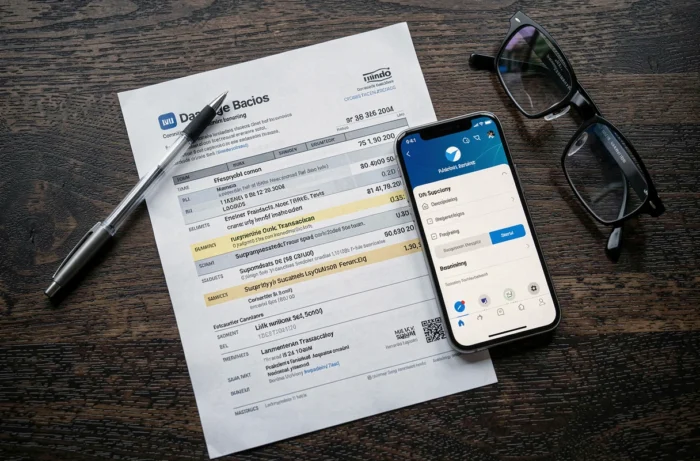
You may have noticed, when clicking on a transaction in your banking app, that a block of details appears? This is where the crucial information is found.

The ICS code (SEPA Creditor Identifier) is a unique identifier assigned to each organization authorized to issue debits. It appears in the transaction details, on your online banking space or your mobile app. Each legitimate company has only one ICS code. By comparing it with that of the Imprimerie Nationale (available on its official documents or by contacting their customer service), you can immediately know if the debit indeed comes from this institution.
The SIRET number completes the verification. It identifies the physical establishment of the creditor. A quick search on public business directories will tell you if the SIRET corresponds to a real, active entity that matches the displayed description.
If the ICS code does not match any known organization, or if the SIRET points to a dissolved or nonexistent company, you are facing a fraudulent debit.
Fraudulent SEPA debit: deadlines and procedures to obtain a refund
The reaction must be swift. The regulatory framework provides for two distinct situations, with different deadlines.
- Authorized but disputed debit: you had signed a SEPA mandate, but the amount or date does not match what was agreed. You have eight weeks from the debit to request a refund from your bank, without having to justify your request.
- Unauthorized debit (no signed mandate): the deadline extends to thirteen months after the debit date. The bank must refund the amount no later than the next business day after receiving your request, unless it has reasons to suspect fraud on your part.
- Preventive opposition: if you spot a suspicious creditor, you can ask your bank to block any future debit from this ICS code. This opposition prevents any recurrence on your account.
In practice, log into your banking space, identify the transaction, and use the online dispute function if your bank offers it. If not, a registered letter with acknowledgment of receipt remains the safest route.
Fake debits in France: a mass fraud, not an isolated case
Your misadventure is nothing exceptional. Recent data from the Payment Means Security Observatory shows that French banks recorded over 40,000 fraudulent debits in the first half of 2025 alone, for a total amount close to 24 million euros. The average amount per fraudulent debit has increased by about 50% in one year.
About 95% of the defrauded amounts come from fake orders issued by fictitious companies, without a signed mandate from the account holder. This is exactly the scenario that corresponds to an unknown title like “Imprimerie Nati” when no mandate has been signed.
These figures explain why banks have strengthened their verification procedures and why vigilance over bank statements is not a paranoid reflex, but a basic financial protection habit.
Concrete reflexes to avoid recurring fraudulent debits
Spotting a fake debit after the fact is good. Preventing the next ones is better. A few simple habits significantly reduce the risk.
- Check your bank statements weekly, not once a month. A fraudulent debit spotted early allows more time to act within legal deadlines.
- Activate real-time notifications on your banking app. Each debit triggers an alert, allowing you to react on the same day.
- Never share your IBAN via email in response to an unverified solicitation. Leaks of personal data (IBAN, name, address) directly feed networks of fake debits.
- Ask your bank for the list of active SEPA mandates on your account. If an unknown mandate appears, have it revoked immediately.
Fraud by debit relies on inattention and on the delay between the debit and its discovery. Reducing this delay to a few hours changes the game. A regularly verified bank statement, an ICS code checked at the slightest doubt, and a quick opposition are enough to neutralize the vast majority of these attempts.