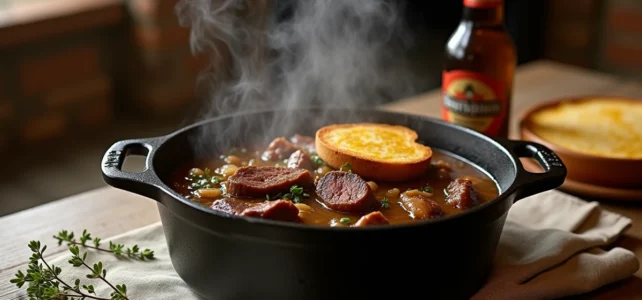
The Flemish carbonnade ch’ti is based on a simple trio: beef, beer, and onions. Three ingredients, but very different results depending on the choices made beforehand. Which cut of meat to prioritize, which beer to pour into the pot, what sweetener to add for the sweet-salty balance? These variables determine the final texture of the dish, its bitterness, and the consistency of the sauce after several hours of cooking.
Beef Cuts for Flemish Carbonnade: Texture Comparison
The choice of meat cut determines the success of the dish more than any other parameter. Not all cuts labeled “for braising” react the same way to long cooking in a pot.
| Cut | Texture after long cooking | Slice retention | Value for money |
|---|---|---|---|
| Chuck | Tender, fibrous at the core | Partially falls apart | Very good |
| Brisket | Firm then tender | Good retention in pieces | Good |
| Shank for pot-au-feu | Very gelatinous, soft | Falls apart easily | Very good |
| Blade | Tender and homogeneous | Acceptable | Higher |
The chuck is the most suitable cut for carbonnade for a beginner. Its fibrous structure forgives cooking errors: even with twenty minutes too long in the oven, it does not dry out. The brisket is suitable if you prefer slices that hold on the plate, but it requires more attentive monitoring.
The shank produces a naturally creamy sauce thanks to its collagen content. However, it falls apart when served, which can be confusing if you expect well-defined pieces. For everything you need to know about Flemish carbonnade ch’ti, the chuck and brisket are the two reliable options to remember.
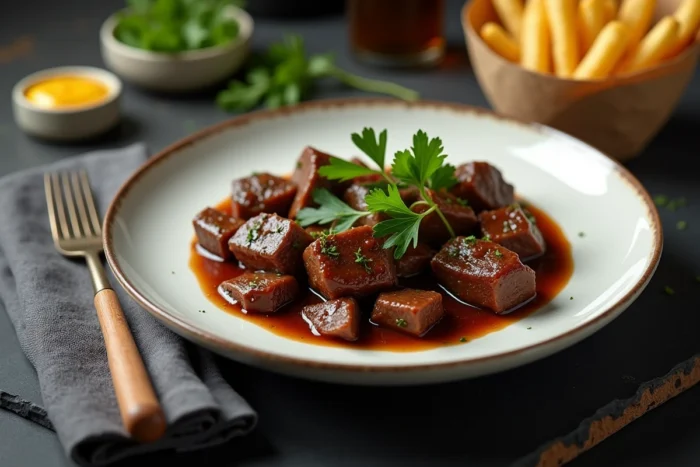
Dark Beer or Blonde Beer in Carbonnade: What Each Type Brings
The traditional recipe calls for a dark beer, but this indication is not enough. Not all dark beers are equal in cooking, and some characterful blonde beers yield interesting results.
A dark abbey beer brings notes of caramel and dried fruits that blend naturally with the brown sugar and gingerbread. The bitterness softens over the simmering, leaving a thick sauce with mahogany reflections.
A strong blonde beer, top-fermented, produces a lighter, more vibrant sauce. The result is less classic but no less valid. Some restaurateurs in the North now use local craft beers as a terroir argument, explicitly mentioning the partner brewery on their menu.
What to Avoid When Choosing Beer
- Very light industrial beers (low-quality pilsner): they bring neither body nor aroma after reduction, leaving an unpleasant dry bitterness
- Very hoppy beers like IPA: the hops concentrate their bitterness during cooking instead of softening, which disrupts the dish
- Flavored beers (cherry, fruits): the added sugar caramelizes uncontrollably and masks the taste of the meat
In practice, an abbey dark beer with an alcohol content between 6 and 8 degrees is the most reliable choice for a first Flemish carbonnade.
Brown Sugar and Gingerbread: The Role of Sweet-Salty in the Sauce
The sweet-salty balance distinguishes a successful carbonnade from a simple beer stew. Two ingredients ensure this shift: brown sugar and gingerbread.
The brown sugar provides a deep brown sugar flavor, different from white sugar or even standard brown sugar. It melts slowly into the sauce and creates that characteristic dark color. One to two tablespoons are enough for a dish intended for four people.
The gingerbread plays a dual role. Its spices (cinnamon, anise, sometimes ginger) flavor the sauce without needing to measure each spice separately. Its crumb, breaking down during simmering, naturally thickens the sauce without adding flour or a thickener. Spread it with strong mustard before placing it on the meat in the pot: the mustard adds a hint of acidity that balances the sweetness.
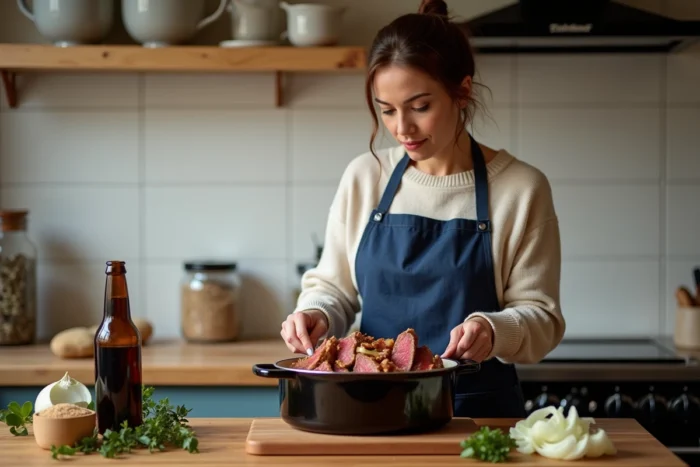
Cooking in a Pot: Temperature and Duration for a Melting Result
The Flemish carbonnade is a slow-cooking dish. The pot, preferably cast iron, maintains a uniform heat that gradually transforms the collagen in the meat into gelatin.
Layering in the Pot
The carbonnade is built in alternating layers. A layer of seared meat, a layer of caramelized onions, a slice of mustard-spread gingerbread, and then repeat. This layering allows each element to diffuse its flavors into the neighboring layers during simmering.
Pour the beer until it just reaches the last layer without completely covering it. The meat on top should remain slightly exposed to develop a subtle crust that adds texture to the dish.
Managing Oven Temperature
An oven set to a moderate temperature, around 150 degrees, yields the best results. Cooking lasts between two and a half and three hours. The reliable cooking test: pierce a piece of meat with a fork. If the fibers separate without resistance, the dish is ready.
Preparing the carbonnade the day before significantly improves the result. A night’s rest in the refrigerator allows the flavors to concentrate, and the sauce gains creaminess when reheated. This detail makes the difference between a decent dish and one that guests ask for seconds.
The Flemish carbonnade ch’ti reheats well, making it an ideal dish for entertaining without stress. The layering and the choice of a suitable beef cut remain the two steps where the difference in result truly lies, well before the brand of beer or the exact type of mustard used.