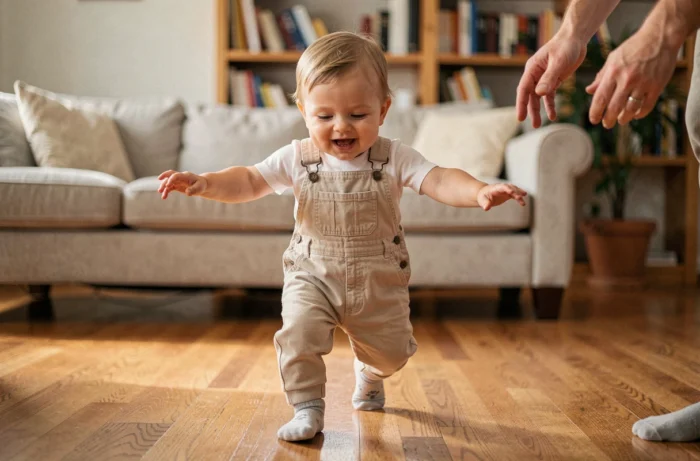
Your child climbs onto the edge of the sofa, wobbles for a few seconds, then falls back onto their bottom. This moment, filled with excitement and apprehension, marks the beginning of a motor phase where every detail of their environment matters. Supporting a child’s first steps is not just about holding out your hands: the floor, the furniture, the type of footwear, and even the objects lying around play a direct role in their safety and confidence.
Push walker or walking cart: a choice that changes everything
Have you noticed that a child sitting in a seated walker moves forward without controlling their trajectory? This type of push walker is still discouraged by pediatricians. The American Academy of Pediatrics (AAP) has taken a stand against these devices, as they place the child in a posture that does not correspond to the natural mechanics of walking.
The problem is real: the child pushes with their toes instead of rolling their foot from heel to toe. They gain speed without mastering their balance, which increases the risk of falling down stairs or colliding with furniture.
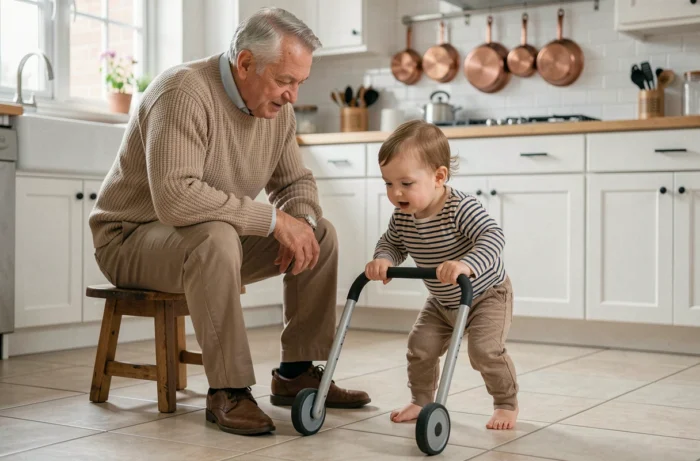
The walking cart (push walker) is the recommended alternative. The child stands behind the cart, pushes with their own legs, and can stop whenever they choose. Specialized resources on mespetitspas.fr detail the selection criteria for this type of equipment, including the stability of the cart and the durability of its wheels on different surfaces.
A cart that is too light can slide and unbalance the child. Make sure the model withstands the child’s full weight without tipping forward when they lean on it.
Floor, bare feet, and footwear: what truly aids walking learning
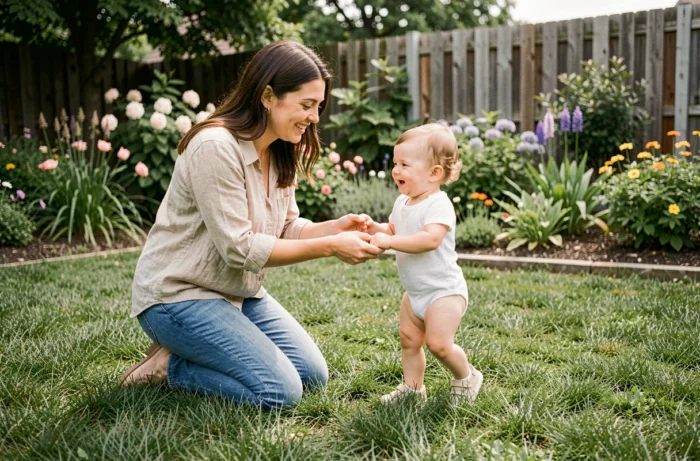
Before thinking about shoes, consider the floor. A hard, non-slip floor is the best surface for first steps. Wood, tile, or linoleum provide a stable surface. Thick carpets or very soft rugs absorb impacts and complicate balance work.
Why prioritize bare feet at home? Because bare feet directly capture information from the ground. Toes grip, the arch adapts, and the foot muscles strengthen with each step. It’s a natural training that shoes limit.
When to wear shoes, and how
Outside, protection becomes necessary. But a soft slipper with a thin sole is sufficient for the first outings. The sole should be thin enough for the child to still feel the ground beneath their feet.
- Choose a soft sole that you can easily bend between your fingers, with no rigidity at the arch.
- Check that the slipper holds the foot without compressing it: a finger should fit between the child’s heel and the back of the slipper.
- Avoid rigid high-top shoes for toddlers, as they limit ankle mobility during learning.
Classic walking shoes, with thick soles and rigid uppers, are only useful much later, when walking is mastered and the child is navigating varied outdoor terrains.
Securing the home at floor level, not just up high
Most parents think about securing electrical outlets and table corners. But a child who is starting to walk primarily explores the floor and everything on it.
Small objects on the floor are the most underestimated danger. Button batteries, fallen refrigerator magnets, small toy pieces from an older sibling: the moving child picks them up and puts them in their mouth. The Office for Product Safety and Standards (OPSS) launched a specific campaign in 2025 on the ingestion dangers of button batteries and magnets in young children.
Critical areas to reassess
When your child wasn’t walking yet, certain areas of the house seemed out of reach. That is no longer the case.
- Low cupboard doors accessible as soon as the child moves: install door locks on those containing household products.
- The legs of tall furniture (bookshelves, dressers): secure them to the wall with anti-tip straps, as the child will grab onto them to pull themselves up.
- Door thresholds and small steps between rooms: these are the first sources of falls for a beginner walker.
Child’s rhythm and parents’ reactions to falls
Walking is generally acquired between 9 and 18 months. Some children walk early, while others prefer to crawl for a long time before taking the plunge. A child who is not walking by 14 months is not delayed. They are building their muscle tone and coordination at their own pace.
Encouraging without forcing is the key. Place a toy a few steps away from the child to encourage them to move forward, but do not force them to stand. A child who is forced to walk before they are ready often lacks confidence once they are let go.
How to react when they fall
Falls are part of the learning process. Your reaction shapes the child’s response. If you rush in with concern at every fall, the child associates falling with a serious danger.
Stay calm, let them assess the situation themselves. In the vast majority of cases, they will get up on their own after a few seconds. A neutral word of encouragement (“Up you go”) is enough. Reserve your intervention for falls that are genuinely painful, with impact on a corner or a hard surface.
Knee pads or padded pants have no proven usefulness and can hinder freedom of movement. It’s better to have an open space than a child overly equipped in a cluttered living room.
Learning to walk takes several weeks, sometimes several months, from the first hesitant step to confident walking. Each child builds their own timeline, and the role of parents lies more in arranging the space and managing their own reflexes than in the walking technique itself.