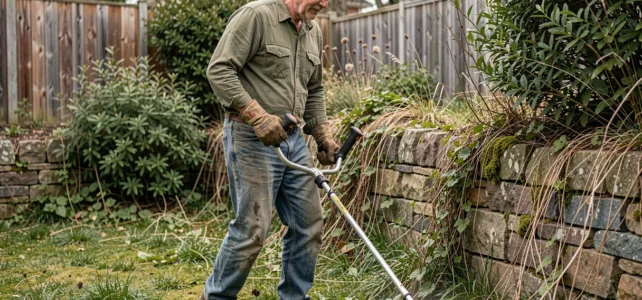
A sloping plot with brambles that gain ground each week, a hedge of thuja bordered by wild grasses inaccessible to the mower, or a bank that the municipality asks you to clean before summer: it is often a concrete constraint that drives one to invest in a brush cutter.
Choosing the right model is not limited to the power displayed on the product sheet. It depends on the type of vegetation, the configuration of the terrain, and sometimes regulatory obligations that many property owners discover too late.
Brush cutter and fire risk: an underestimated selection criterion
Fire safety is rarely considered when comparing brush cutters in stores. Yet it is a parameter that should guide the choice of cutting tool as much as the power of the engine.
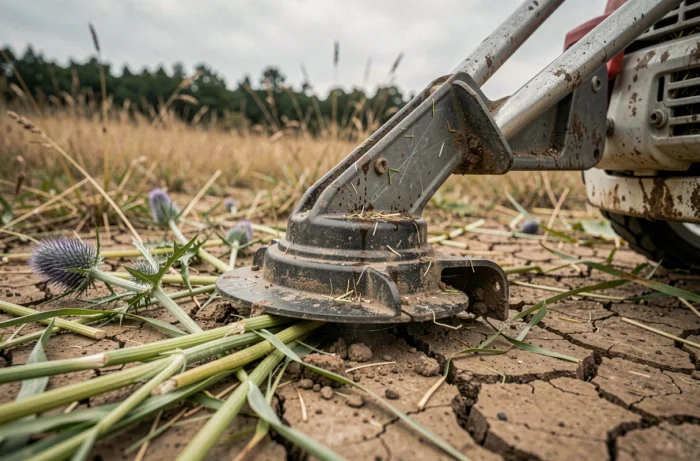
On dry vegetation, a metal blade can produce sparks when in contact with a stone. Recent field reports and prevention advice recommend favoring nylon line under these conditions, specifically to reduce the risk of ignition. The nylon line does not generate sparks, making it the suitable accessory for dry periods or exposed areas.
It is beneficial to brush cut early in the morning when the vegetation is still moist and the wind is low. Working in full heat on dry terrain with a steel blade accumulates risk factors.
If you maintain a plot in an area classified as at risk for wildfires, several specialized catalogs like the one available at debroussailleuse-warrior.com allow you to filter models by type of cutting tool and adapt the choice to these constraints.

Legal obligations for brush cutting: what your municipality can require
In departments exposed to wildfires, brush cutting around homes is a legal obligation, not a recommendation. Prefectural orders set precise distances to be respected around buildings, and the timeline for completion varies from one municipality to another.
Failure to comply with this obligation exposes you to penalties. Several recent reports highlight that this rule remains poorly respected, despite its proven effectiveness in protecting homes.
This regulatory context directly influences the choice of machine. One does not brush cut a regulatory strip of land in the same way as finishing a lawn edge. The areas concerned are often larger, the vegetation tougher, and the work must be completed within a constrained timeline. A device capable of lasting over time, with a cutting tool suited to the type of vegetation present, is then required.
Nylon line, blade, or disc: choosing the cutting tool according to vegetation
This is where many buyers go wrong. They choose the machine first, while the right reflex is to start from the vegetation to be cut.
- The nylon line (round or square) is suitable for tall grasses, grasses, and finishing edges. Lightweight, it limits fatigue and does not risk projecting metal shards. On dry vegetation, it is the safest choice against the risk of fire.
- The three-tooth blade or brush cutter knife tackles brambles, young woody shoots, and dense undergrowth. The engine power must match: an undersized engine with a heavy blade can stall or overheat quickly.
- The grass disc (plastic or soft metal) offers a compromise between line and blade for mixed terrains where tall grasses and small shrubs alternate.
On a plot with several types of vegetation, favor a machine compatible with different cutting heads. Being able to switch from nylon line to a blade without changing devices saves time and avoids investing in two distinct machines.
Gas, battery, or corded: motorization and terrain use
The motorization is chosen based on the area, access to the terrain, and the planned working duration.
The gas brush cutter remains the reference for large areas and terrains far from any electrical outlet. Its autonomy is limited only by the fuel tank, and its power allows for working with heavy blades on thick brambles. In return, it is noisier, heavier, and requires regular engine maintenance (air filter, spark plug, carburetor).
The battery brush cutter has progressed in recent years. Autonomy remains its weak point for long sessions, but for a medium-sized garden with regular interventions, it offers a good compromise between power and comfort. No cable, no gas-oil mixing, immediate start.
The corded model (electric) is suitable for small gardens close to the house. Its power is often sufficient for nylon line on tall grasses, but the cable significantly limits freedom of movement and excludes rugged terrains.
Ergonomics and harness: what makes the difference in prolonged use
You can compare technical sheets for hours and overlook a criterion that reveals itself in real situations: the comfort of use over a half-day of work.
The type of handle directly influences maneuverability. A loop handle is suitable for sloping terrains and cluttered areas. A bicycle handle (handlebar) offers better control on flat and clear terrain, with regular swaying from left to right.
The harness is an element that recent feedback places among the decisive criteria. A simple shoulder strap harness is sufficient for short sessions. For regulatory brush cutting on large areas, a double strap harness with a front hook distributes the weight and significantly reduces back fatigue and shoulder tension.
The overall balance of the machine also matters. A poorly balanced brush cutter pulls forward or downward, forcing you to constantly compensate with your arms. Feedback varies on this point depending on the brands, but testing the device in hand before purchase (or at least checking the weight and announced distribution) avoids many disappointments.
Last often forgotten point: the condition of the cutting head and line. A worn line or a clogged head reduces efficiency and increases the load on the engine. Checking these elements before each session also protects the machine in the long term.